Not every URL will be found
The internet changes too quickly for complete guarantees.
DMCA basics
A DMCA takedown notice is a formal request used in certain copyright situations to ask a service provider to remove or disable access to infringing material.
This page is general information, not legal advice. Counsel must approve final public wording.
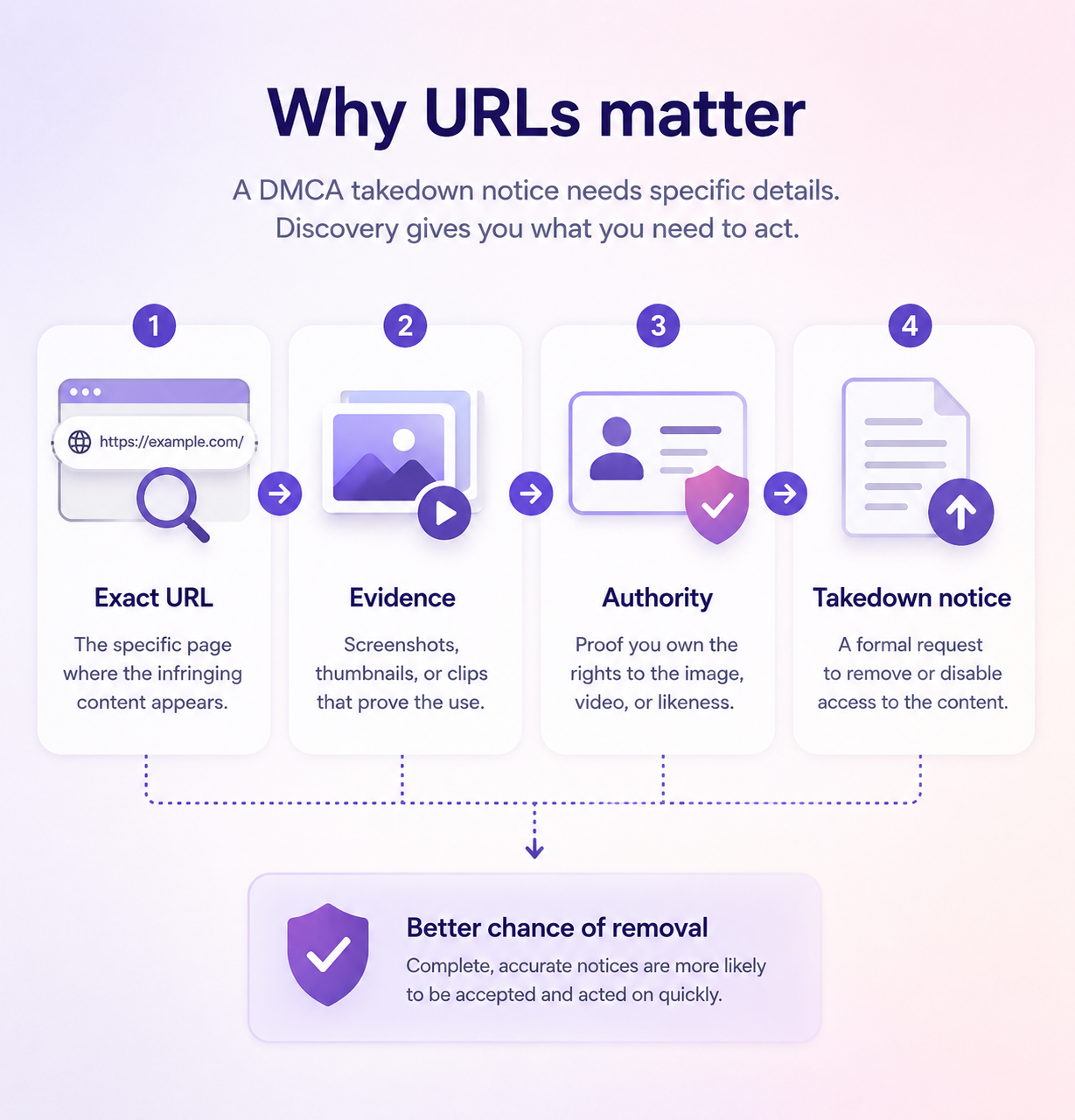
Why URLs matter
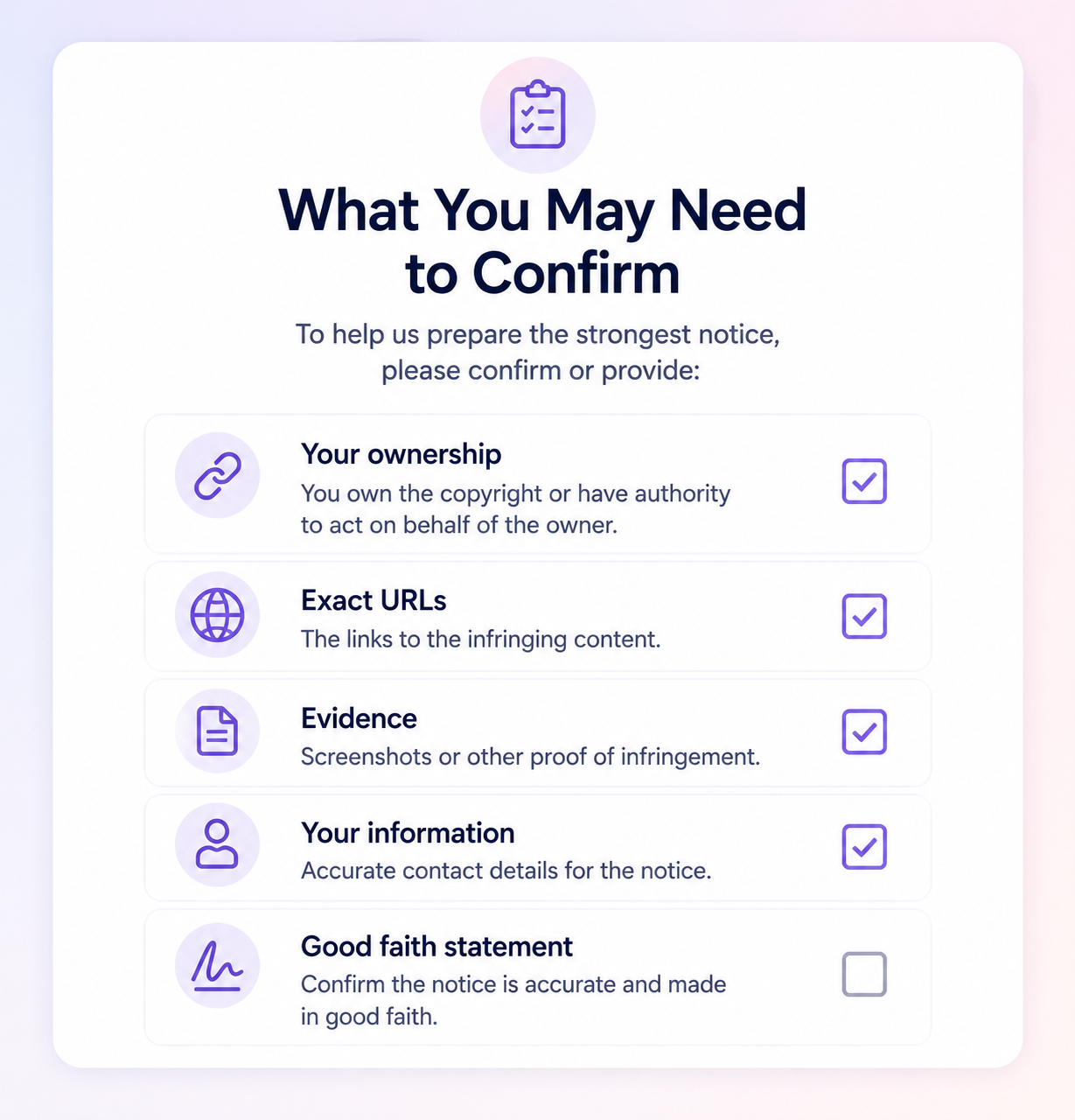
A notice usually needs specific information, including the exact URL, evidence of the content, ownership or authorization details, contact information, and required legal statements.
Guard My Image helps with discovery and documentation so customers do not have to search every source manually.
Workflow
Takedown support is a workflow, not a magic button.
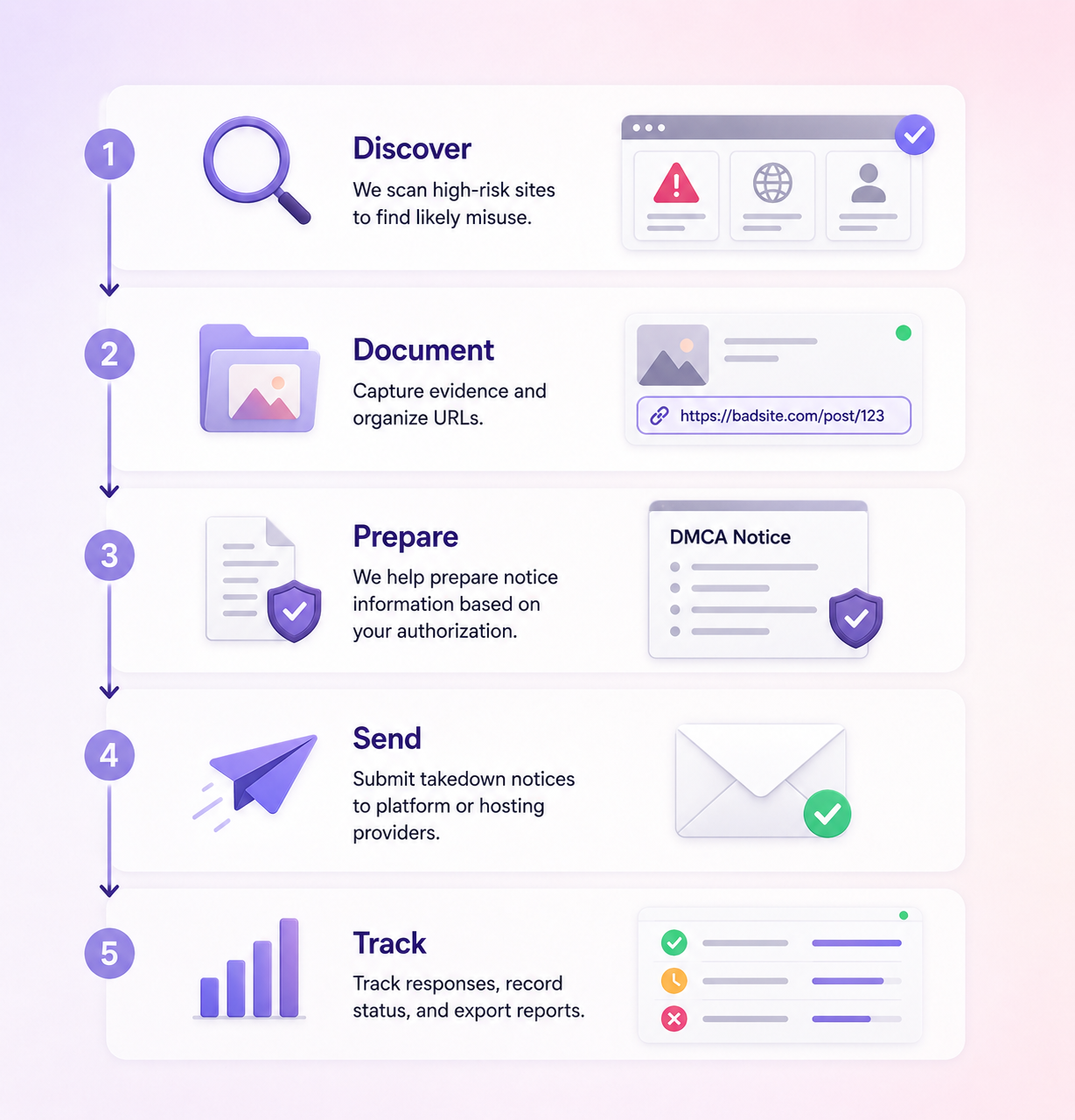
Find likely misuse and source URLs.
Capture relevant source, date, evidence, and match notes.
Assemble notice or reporting information.
Submit according to plan and authorization.
Record responses, removals, and open issues.
Limitations
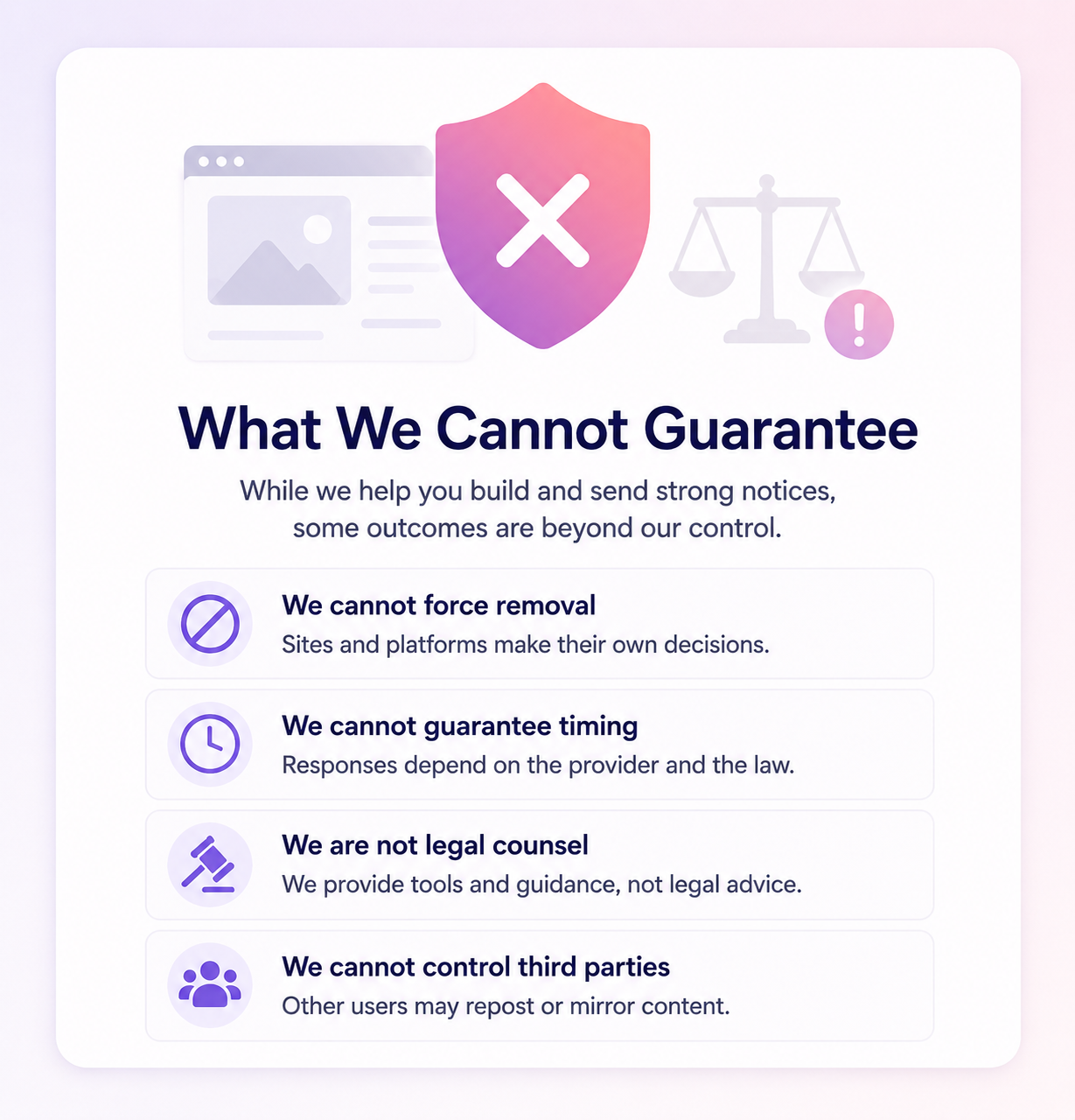
The site must be clear about limits without sounding helpless.
The internet changes too quickly for complete guarantees.
Platforms, hosts, and site operators control outcomes.
Ongoing monitoring is often more useful than a one-time search.
Guard My Image is not a law firm unless separately agreed through counsel.
Customer confirmation
Before action, customers may need to confirm the content is theirs or they are authorized, the use is not authorized, and the information provided is accurate.
Start with the free exposure check and move into ongoing monitoring when ready.